
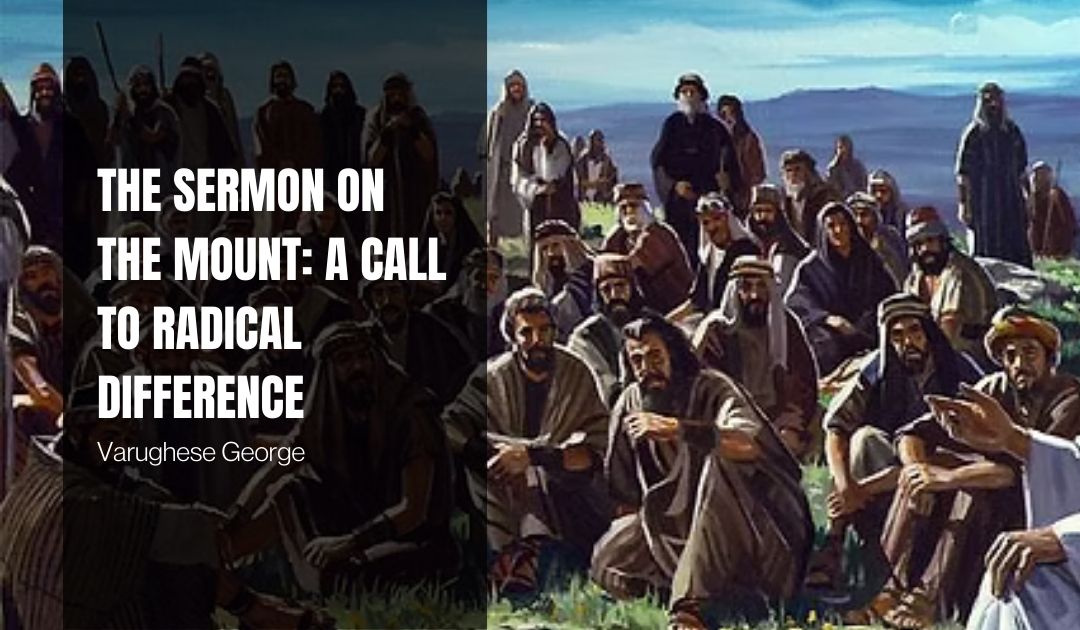
The Sermon on the Mount stands as perhaps the most profound section of Scripture ever delivered. Saint Augustine described it as “the perfect standard for the Christian life,” while Dietrich Bonhoeffer based his classic work The Cost of Discipleship on its exposition. Even those outside the Christian faith, like Mahatma Gandhi, have been profoundly influenced by its teaching. This sermon, found in Matthew 5–7, represents the distilled theology of Christ himself.
The Context: A Kingdom Unlike Any Other
When Jesus delivered this sermon, the Jewish nation was desperately seeking deliverance from oppressive Roman rule. They wanted political liberation. But Christ came to show them—and us—that this is not the deliverance any of us truly need. After his baptism and temptation, Jesus began preaching throughout Galilee, “teaching in their synagogues and proclaiming the gospel of the kingdom and healing every disease and every affliction among the people” (Matthew 4:23). His fame spread rapidly, and great crowds followed him from every region.
It was precisely at this moment of swelling popularity that Jesus went up the mountainside to deliver this landmark message. Rather than capitalising on the crowds’ enthusiasm, he wanted to make clear that Christianity is not a bandwagon for everyone to join. It is a battle. The Christian life is serious and demanding—so demanding that we are called to take up our cross and follow him.
The Essential Difference
The sermon describes what human life and community look like when they come under the gracious rule of God. In one word: different. As God commanded his people in Leviticus 18:3–4, “You shall not do as they do in the land of Egypt, where you lived, and you shall not do as they do in the land of Canaan…. You shall follow my rules and keep my statutes.”
One of the key verses in the sermon appears in 6:8, where Jesus says, “Do not be like them.” From beginning to end, the essential theme of Scripture is God’s purpose to call out a people for himself—a holy people, set apart from the world to belong to him alone and to obey him.
The believer and the unbeliever are fundamentally different in three ways. First, they differ in what they admire. The Christian admires the person who is poor in spirit, while the world despises such humility and champions self-confidence and self-expression. Second, they differ in what they seek. “Blessed are those who hunger and thirst for righteousness” (Matthew 5:6)—not for wealth, status, or publicity, but for right standing with God. Third, they differ in what they do. As Peter writes, we are “sojourners and exiles” who must “abstain from the passions of the flesh” and maintain “honourable conduct among the Gentiles” (1 Peter 2:11–12).
The Authority of the Preacher
Matthew deliberately notes that, when Jesus sat down to teach, he did so with formal authority. In Jewish culture, teachers sat when making official pronouncements. Throughout the sermon, Jesus employs the striking formula: “You have heard that it was said…. But I say to you.” Unlike the Old Testament prophets who prefaced their messages with “Thus says the Lord,”Jesus spoke with his own authority, claiming the exclusive right to interpret God’s word infallibly. This is nothing less than an affirmation of his deity.
As the writer to the Hebrews declares: “Long ago, at many times and in many ways, God spoke to our fathers by the prophets, but in these last days he has spoken to us by his Son” (1:1–2). The crowds recognised this, for “when Jesus finished these sayings, the crowds were astonished at his teaching, for he was teaching them as one who had authority, and not as their scribes” (7:28–29).
A Sermon for Everyone
The sermon is addressed to all—believers and unbelievers alike. It has a powerful message for the unconverted, tearing away false religious concepts and revealing what genuine Christianity looks like. It exposes two critical areas where unbelievers are fatally ignorant: the holiness of God and the sinfulness of man. As Calvin wrote, “Nearly all the wisdom we possess consists of two parts: the knowledge of God and of ourselves.”
For believers, the sermon shows what true kingdom living looks like and challenges us to ensure our conduct matches our claims. The beatitudes describe not what we must do to become Christians, but what characterises those who are citizens who of God’s kingdom. These qualities—poverty of spirit, mourning over sin, meekness, hunger for righteousness—are never found in the natural man. They are fruits of the new birth, given by Christ alone.
The Call to Revolutionary Living
Supremely important is this: The Sermon on the Mount is a description of character, not merely a code of ethics. It describes not what a person does, but who a person is. The most obvious feature of the Christian church today, sadly, is its superficiality. We have failed to take Scripture seriously, particularly regarding sanctification and holiness. Yet if we truly lived this sermon, it would be the greatest support to our evangelism.
In the second century, a Roman writer named Aristides told Emperor Hadrian about Christians, commenting on their integrity, morality, and family life. His most compelling observation concluded: “Truly this is a new people. There is something divine in them.” When believers genuinely live as salt and light, the world takes notice.
A Mirror for Self-Examination
This sermon forces us to examine ourselves. Do we belong to this kingdom? Are we truly ruled by Christ in every way? Are we manifesting these qualities in our daily living? Is it even our desire to do so? As Peter writes, God’s “divine power has granted to us all things that pertain to life and godliness, through the knowledge of him who called us” (2 Peter 1:3). We have the God-given resources to live out this calling.
The Sermon on the Mount remains the perfect standard for Christian life—not as a means to salvation, but as a description of what salvation produces. It calls us to be utterly different from the world, not through obnoxious pride, but through Christ-like character that draws others to glorify our Father in heaven.

About the author
Varughese George is an elder at Glenvista Baptist Church in South Africa. Married to Sheeba, he is father two two children and grandfather to a growing number of grandchildren.
